Thursday, March 8, 2018

The Panama Canal

The Canal from the rainforest canopy in Gamboa.

Panama is famous for the  Panama Canal. The engineering feat that allows water vessels to cross through Central America, thus avoiding the distance, cost and extra dangers of traveling around South America.

While we opted not to do a tour of the locks (the system that makes it possible for those mammoth cargo and cruise ships to pass), we did learn a bit about the canal both before and during our stay. And, we got to see it from high above in the rainforest canopy of the Gamboa and up close from a small motor boat, during an hour cruise up the canal during our search for monkeys.

I am fascinated by cargo ships. By all forms of transportation really, but especially cargo ships so to get just a few feet from them was thrilling. We learned that it takes 8-10 hours for a ship to pass through the canal moving at around 8-10 mph. We also learned that in the morning the ships go from the Pacific to the Caribbean (to the Atlantic) and it's the reverse in the afternoon.  We were shocked to discover that approximately 25,000 men died trying to build the canal. The French started it in  1881 but stopped due in part to the hardships and deaths with the USA eventually taking over and completing the canal in 1914.

What struck me most was that the canal was quiet and smaller than what I imagined. It was also quite beautiful. For some reason I envisioned a busier, more populated canal. It was a pleasant surprise to find quite lovely and peaceful too. Our short time there were both of those things as well.


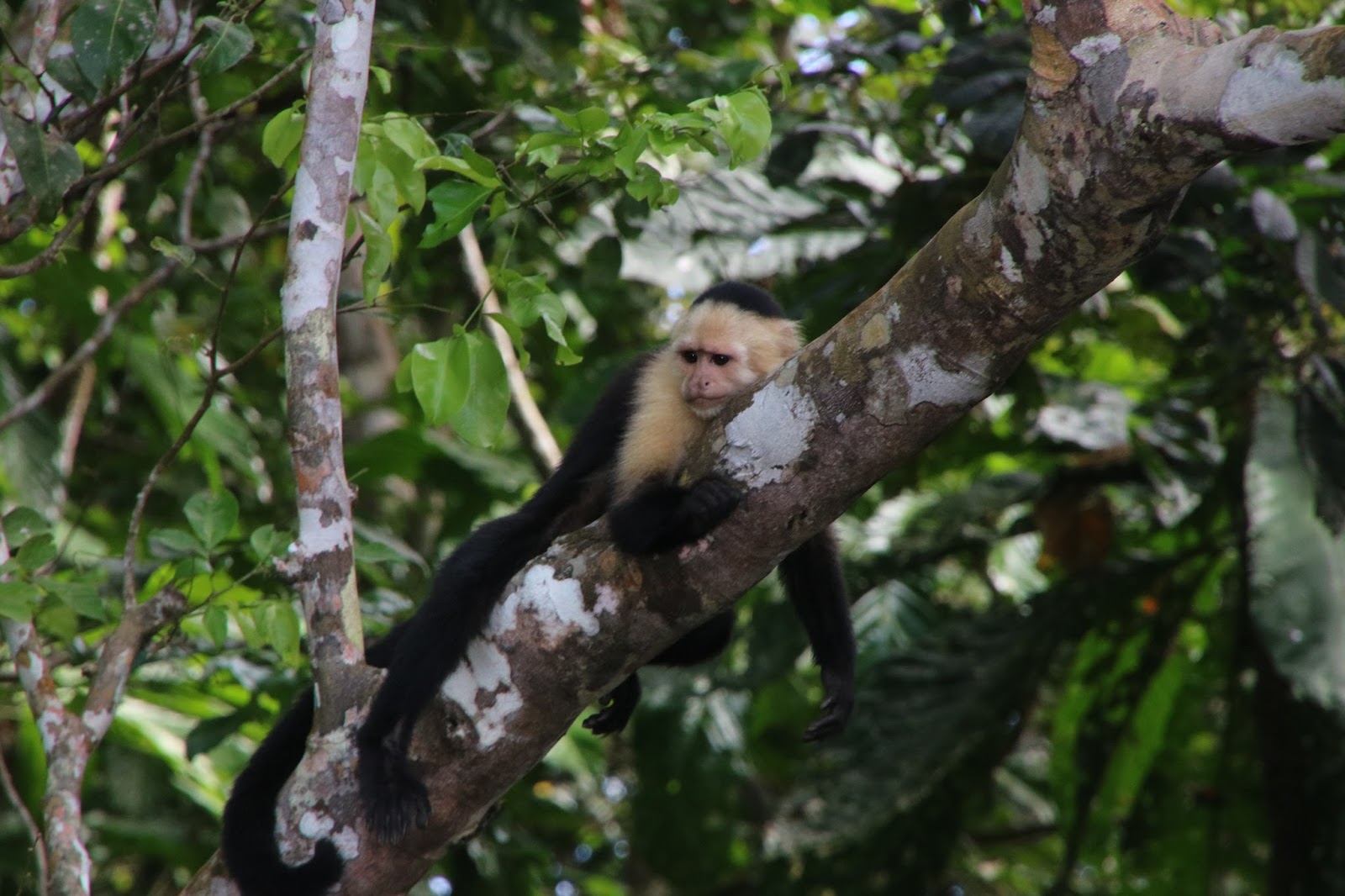
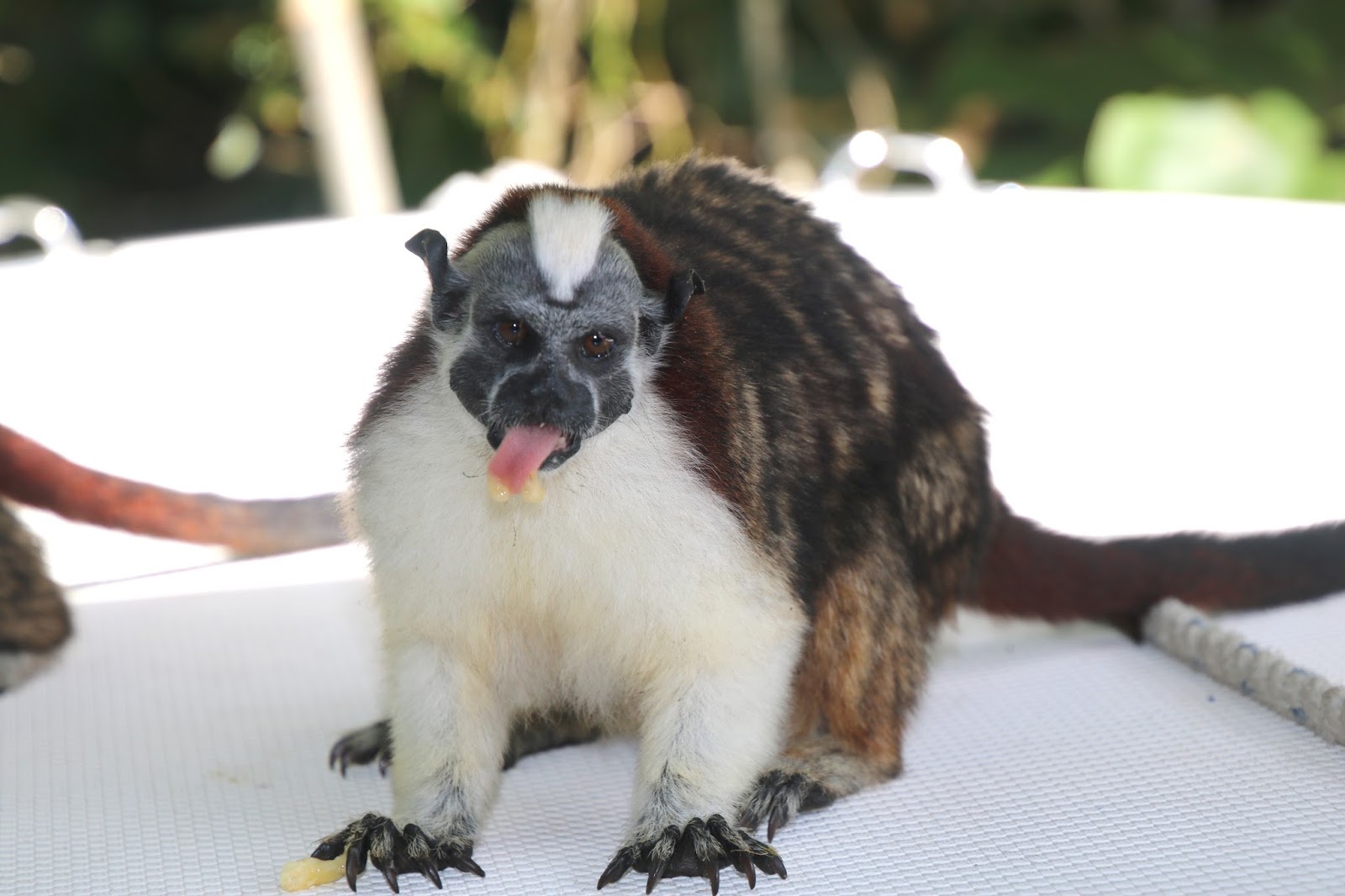
Tres Monos and an Iguana


 What do two chinese zodiac monkey parents and one child, who acts like a monkey, along with her sister, get excited for in Panama? Seeing monkeys in the wild, of course. 

During a short boat trip up the Panama Canal, we went in search of mono (spanish for monkey). We hit the monkey jackpot. We saw  three species; capuchin, tamarin and howler, up close and personal. We also got lucky enough to spot an iguana chilling on a log.

My soul child loves to see all types of wildlife especially in far and remote places. Panama did not disappoint and to share that joy with the girls was magnificent. I couldn't imagine anything more wonderful than sharing in the elation of finding wild monkeys, who hovered in the trees above us and were brave enough to climb on the boat to sneak a piece of banana. They were sweet, shy and sometimes mischievous. Not unlike the humans that were pleased to meet them and make memories to last a lifetime.


Tuesday, March 6, 2018

Embera

Panama is a land rich with culture that predates the arrival of the Europeans (who subsequently brought much destruction). In Panama there area about a half a dozen native tribes who are doing their best to maintain their culture in a world that is changing beyond rapidly.

One of those tribes is the Embera. A group of warm, colorful peoples, who make their homes along the rivers and waterways in the jungle areas of Panama. They fish in the waterways where they make their villages and hunt in the rain forest. Starting in more recent times, they farm the land, eating plantain, cassava and other foods. They utilize the resources in the natural world to make instruments and to derive colors to tie baskets and to pain their bodies. They still rely on shaman and natural remedies for ails to body and mind.


I knew that while in Panama, I wanted to take the girls to visit some of the cultures that lived closer to the earth. I wanted them to get up close to those that lived more like the old ways as well as see a very different way of living. Amara and Havana's lives are vastly different from the Embera;  they are are privileged western children,. Yet, the western world is very poor when it some to certain areas of life. The Embera may not have the same material comforts as my girls do. but they are equally rich. This is in part due to their relationship to the natural world as well as their deep sense of community and their understanding of the world on a a deeper, spiritual level.

Personally, I was very moved during our visit with the Embera. Through our translator, I asked many questions. At one point, I was told I was asking questions "like an anthropologist." I replied that I was curious how they shared their stories; How their history was passed down. My answer was," that much was lost due to those who invaded" from Europe too many moons ago. Upon hearing that reply, I looked at my host, straight in the eyes, my own filled with tears and through my translator told him, "I am sorry for all that you lost through colonism and imperialism." His gaze, full of emotion as well, met mine for a minute. He shook his head and in that moment, we connected deeply. Despite our language differences, our hearts knew no barriers. 


After we learned the history, we were given a tour of their small but comfortable village and then took a short walk in the jungle where were where shown what different trees and vines provided. We also tried some fruits that we quite yummy.
The highlight for the girls may have not been the Embera though. One family had adopted an orphaned Capuchin monkey that we got to hold.

Well, that is not totally true. The girls loved the dancing and they were tickled when their father danced with the women. When we were ready to leave, they got temporary tattoos, made from vines, which they proudly displayed during the remainder of our adventures in Panama.

I trust that our time with the Embera was both enlightening and educational and that the things we experienced planted seeds that will take root and blossom over the course of both their lives. For this is why we travel. Open hearts equal open minds equal open, loving, and meaningful lives.


We were offered fish and plantain to eat. Even Havana enjoyed it!

Our host

The leader of the village. I found her just exquisite; physically and mentally.


Traditional boat used for fishing.


Sunday, March 4, 2018

What Do You See? (Gamboa)


The Gamboa Resort, situated at the end of the road to Gamboa, in the middle of a national park of rainforest, wetlands, the Panama Canal, Gatun Lake and the home of the Embera People,was the ideal place to discover things colorful, exciting, educational. From the hidden toucan (my absolute favorite bird) to the mammoth cargo ships; wherever we looked, we were oohing and ahhing at all the sites that surrounded us. Gamboa did not disappoint.


Embera Village; one of the native people's home.

The view from the lobby of the Gamboa Resort. 

Gatun Lake

My favorite flower; the Bird of Paradise

Two toed sloth hanging upside down in the tree. The guide used a bright light to locate them.

 Freighter Ship on the Canal


17!!!!!!!!!!!!!!!!!

Havana is now 17! One more year until she reaches that milestone adulthood birthday. And while she is in her last year of childhood, Havana ...